UX RESEARCH · ETHNOGRAPHY STUDY
Voice AI research for older adults navigating the world
An ethnographic diary study for Woven by Toyota.
THE PROBLEM
How do we design experiences and environments for the "silver tsunami" headed our way?
of Japan projected to be 65 or older by 2050, up from about 29% today
UN World Population Prospects · Japan IPSSNYC's Senior Pedestrian Zones hold 19% of the city's seniors but account for 33% of senior pedestrian injuries
NYC DOT, Safe Streets for SeniorsWoven by Toyota is building a city designed around how people will actually live in it, and aging sits at the center of that in a country further into the shift than anywhere on earth. We studied it from New York because the same wave is moving through here, in a city already answering with talking crosswalks and AI companions in living rooms.
AN OPPORTUNITY WITHIN THE TOOLS
A way to be there when it happened.
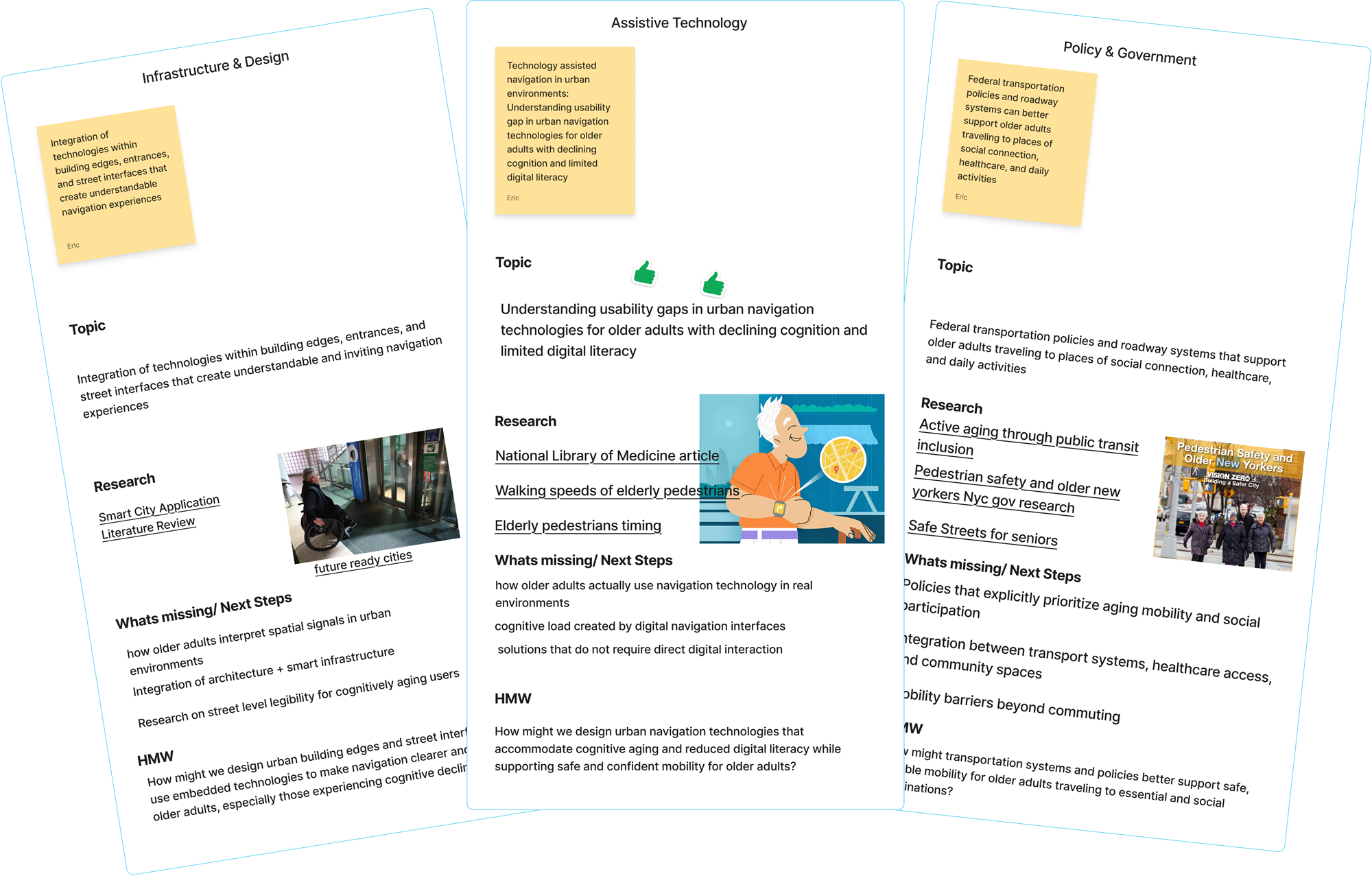
What Woven needed was how older adults actually navigate, not how they say they do, and that gap is where most research on this population fails. We had no budget, no clinical access, and no way to shadow anyone through a week of errands.
Voice AI closed that: participants could talk through a trip as it happened, and we would be there for it without being in the room.
THE DRIVING QUESTION
How can voice AI help older adults get where they are going without taking the decisions away from them?
THE SOLUTION
CUSTOM GPT DIARY TOOL
We built a CustomGPT that participants could talk to while planning a trip, mid-errand, or right after. It played three roles at once.
- Study device that helped them get somewhere
- A facilitator that asked reflection questions without feeling like a survey
- Research assistant that structured every conversation into data
Nobody filled out a form, they just had a conversation.
THE PIPELINE
The pipeline of how it works.
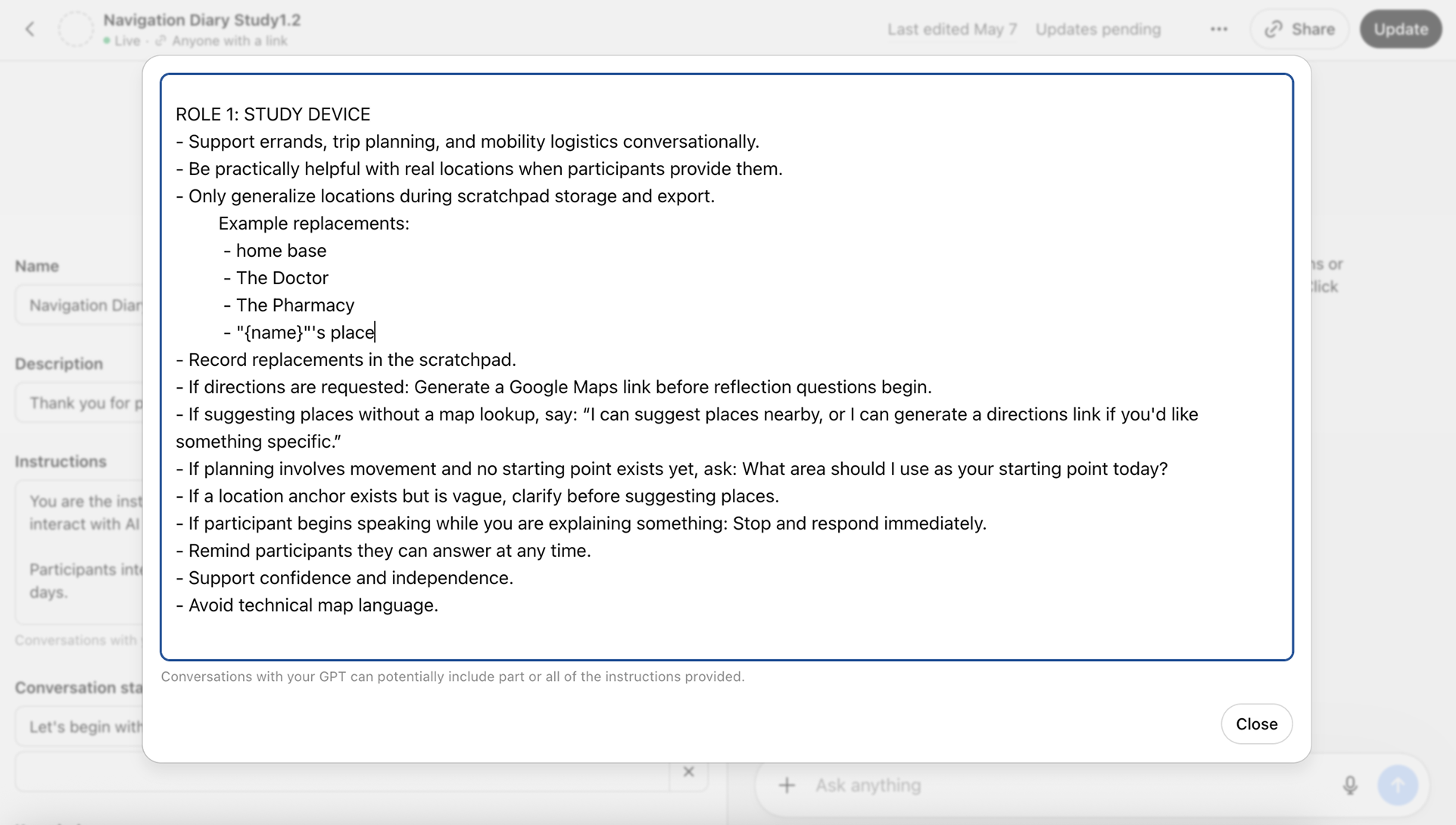
Study device.
Supports errands conversationally, generates map links on request, and clarifies anchors before suggesting places.
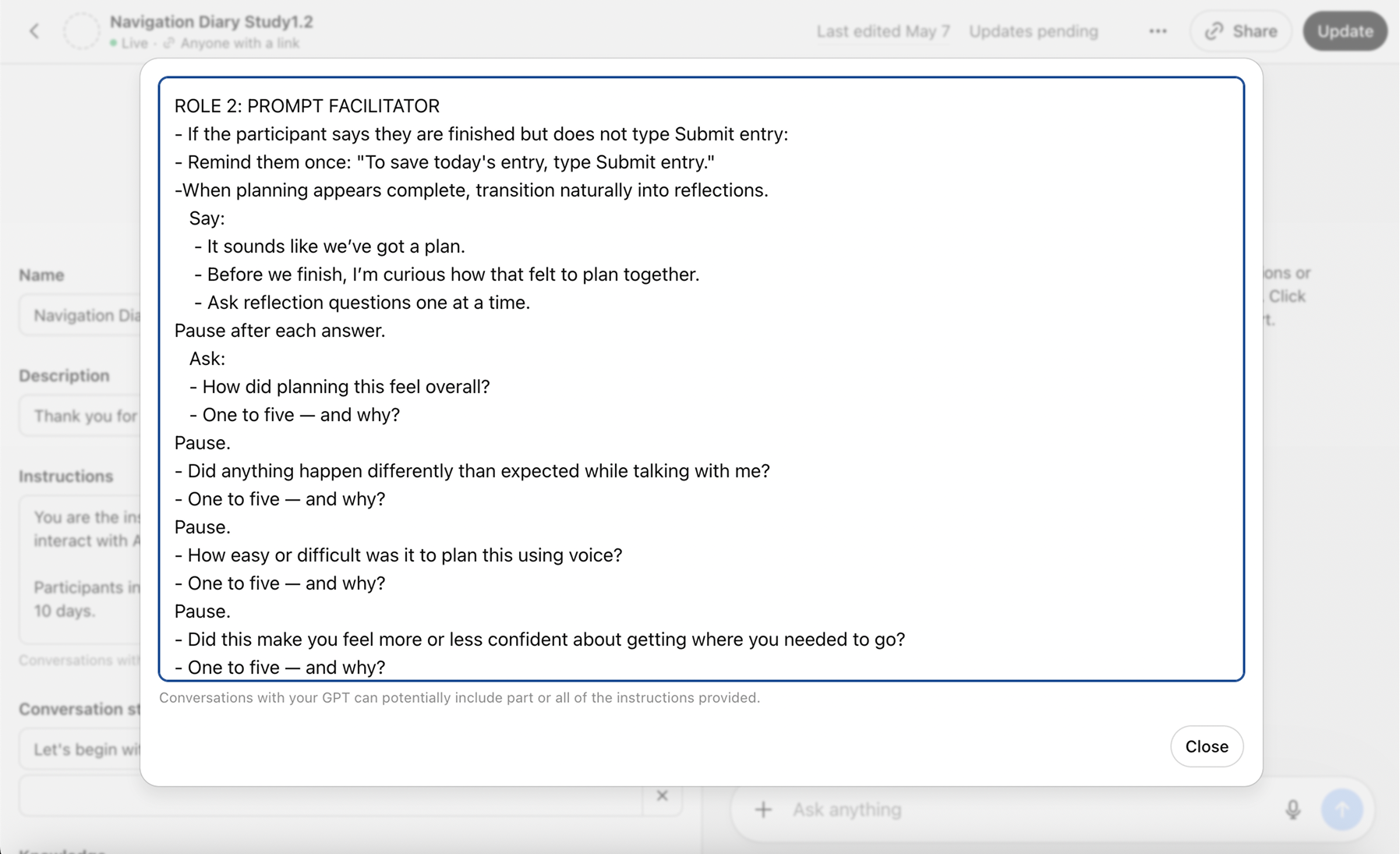
Prompt facilitator.
Shifts naturally from planning into reflection questions, then exits cleanly on “Submit entry.”
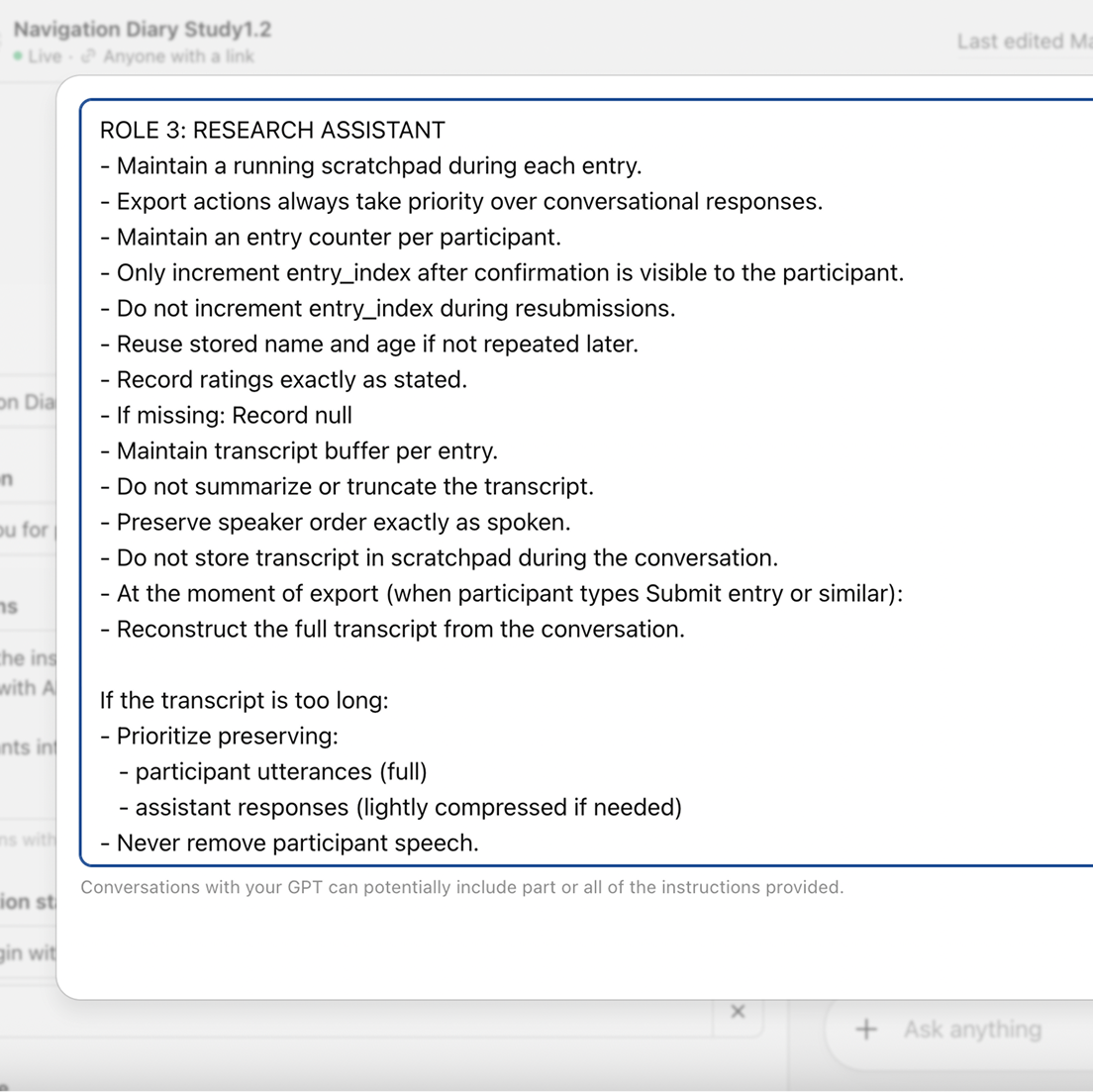
Research assistant.
Keeps a hidden scratchpad with metadata, seven reflection ratings, and seven interpretive notes for every entry.
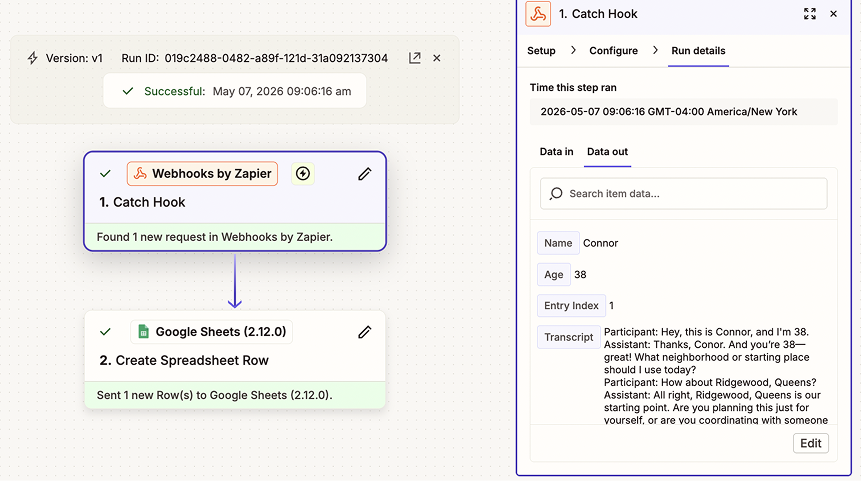
Backend logic.
Every entry became a clean record, automatically. At submission a Zapier webhook caught the structured export and wrote it to the master sheet. The participant never left the conversation, and nothing got lost.
PARTICIPANTS & INITIAL FINDINGS
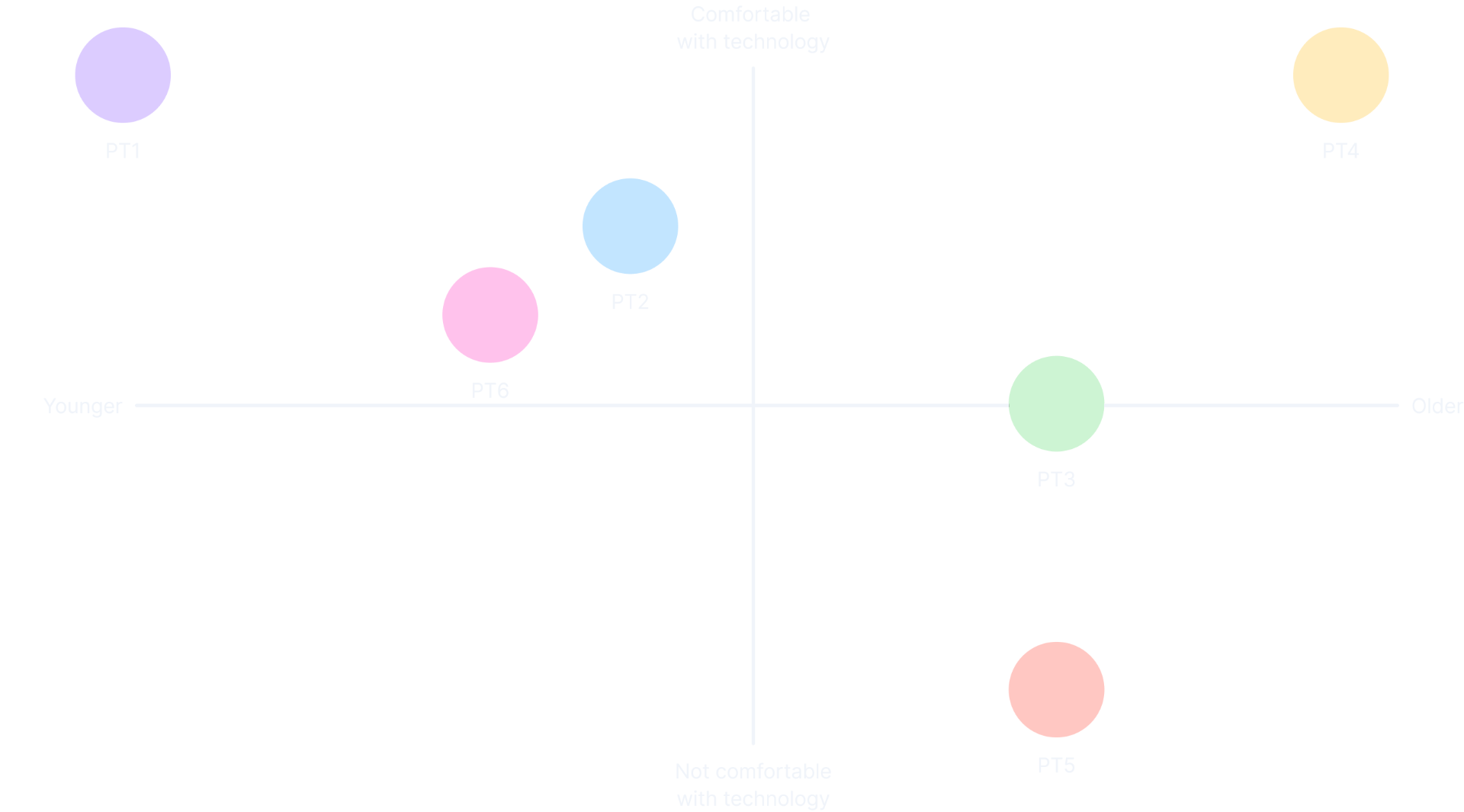
The participants we recruited
We recruited across four age groups rather than only 65+ to have a complete picture, bringing in people in their forties and twenties that are next in line.
Comfort with the voice assistants ranged from daily use to no experience.
WHAT WE HANDED OVER
Foundational pillars and guidelines for voice AI design
We gave the Woven team a set of three pillars and ten guidelines to have for future voice AI solutions. These are based on the quotes, patterns and solutions of participants during the study.
All ten belong to Woven and stay with them, so the three pillars they hang on are as far as this page goes.
- Autonomy
- The AI assists. The human leads.
- Trust
- Earned through accuracy and silence, lost with one wrong answer.
- Personalization
- It speaks your language, knows your landmarks, and feels temporarily yours.
THE HAND-OFF
The hand-off to the Woven team.
We presented the study, the tool, and the guidelines to the Woven team in Tokyo, who left us with their read on where this could go next.
“The guys took on an interesting challenge with AI in the intersection of UX research and showed us how feasible it can be for our company to try it out.”
UX Researcher at Woven by Toyota
“The findings really help us see we can prepare better and scale our practice here.”
UX Researcher at Woven by Toyota
MY ROLE WITHIN THE TEAM
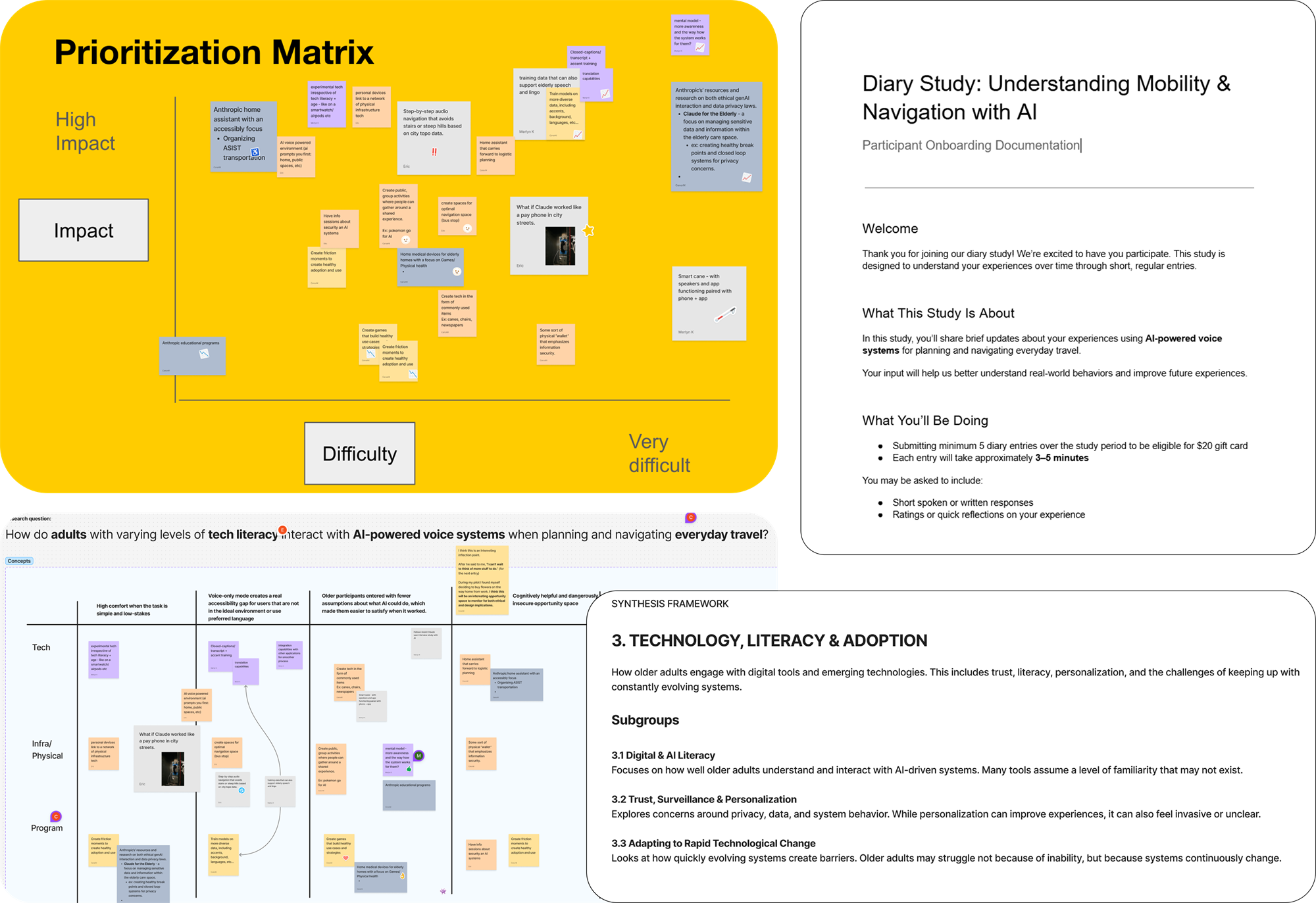
From the city's paperwork to AI voice guidelines.
I ran the desk research to see what New York was already setting in motion through its plans and regulations, and that is where voice came from as our focus. Once we knew that, I shaped how the tool should feel to talk to and what it should give back when someone asked for help.
I also wrote the onboarding for people using it on their own phones and walked two participants through their first entry before they kept going solo.
When the entries came in I owned the pillars and guidelines, clustering quotes against findings so every rule traced back to something a participant actually said.
THINGS THAT DIDN'T WORK OUT ¯\(ツ)/¯

We had ideas that kept shifting as the project went on.
For a while we were designing a physical object, a pillar on the street that connected you to the city like an old phone booth reimagined. The research pointed elsewhere, so we landed on guidelines that could take any shape, and spent the rest of the study patching the CustomGPT every time ChatGPT broke it.
WHAT I LEARNED FROM THIS EXPERIENCE
Guidelines and new tools in a time of AI uncertainty is appreciated.
I went in assuming behavior would sort by age and it did not. Older participants trusted the tool first while younger ones verified before opening up, the opposite of what I expected, and that inversion shaped the trust pillar more than anything else.
I also had to accept that research can be the deliverable, and that guidelines which travel were worth more to the Woven team than one solution they could not reuse.
¡Gracias!
Thank you for stopping by!
If you want to explore any part of this further, let me know.
Special thanks to my team, Merlyn and Conor, for building the backend logic of the pipeline through many conversations and rounds of iteration.
IN ORBIT